
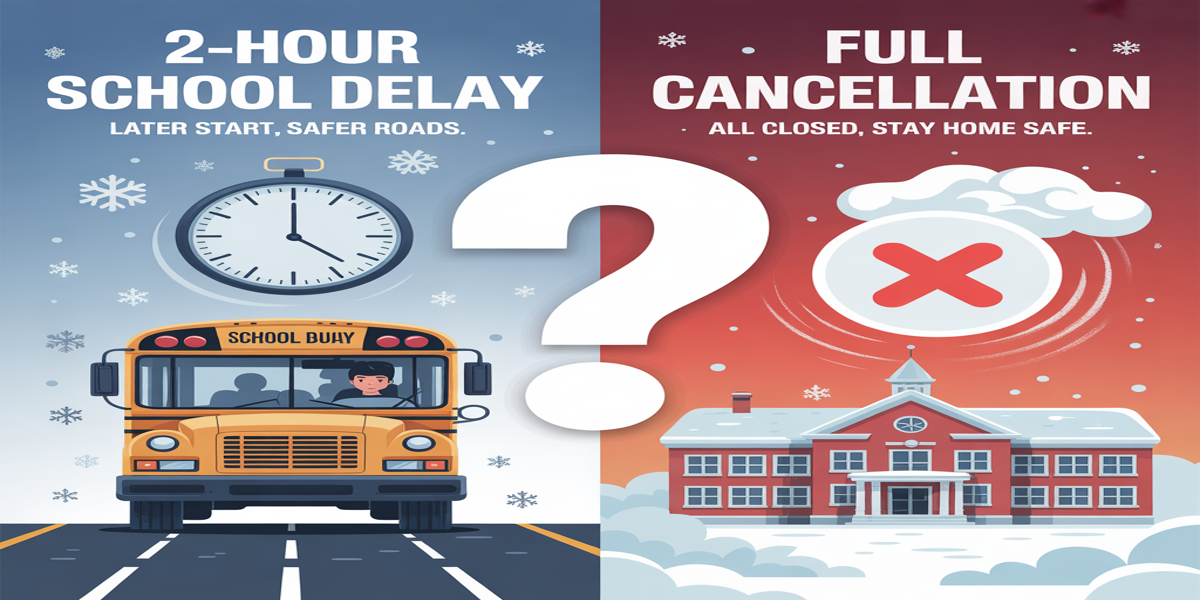
2-Hour Delay or Cancellation? The Inside Scoop on How Schools Make the Call
The 5 a.m. phone buzzes, and your heart jumps. Is it a 2-hour delay or a full school cancellation? For parents and students, it’s a moment of suspense, but for school officials, it’s a high-stakes decision based on safety, data, and intricate logistics.
This decision, made in the dark, quiet hours of the morning, hinges on a complex network of people and real-time data. It’s a high-stakes balancing act between student safety and community disruption. From road crews to meteorologists, the superintendent’s choice is anything but a simple guess. It’s a calculated call aimed at keeping every student and staff member safe. This guide breaks down exactly what goes into that decision, explaining the factors that lead to a welcome snow day versus a slightly later start.
The 5 AM Dilemma: A Superintendent’s Race Against Dawn
It’s 3:45 AM, and Superintendent Dr. Maria Garcia is already on her fourth cup of coffee, staring at a live radar feed from the National Weather Service. Her phone has been buzzing for the last hour with updates. This isn’t just about whether it’s snowing; it’s about the safety of thousands of students and staff during their morning commute.
This pre-dawn process is a well-oiled machine. Dr. Garcia is on a conference call with the district’s transportation director, who has staff physically driving key bus routes to check for black ice and drifts. She’s also coordinating with the local highway department to get real-time updates on their plowing progress. The head custodian is on the line, too, reporting on the status of school parking lots and walkways. Every piece of information is critical. A delay might give crews enough time to clear the roads, but a forecast for continued heavy snow or a dangerous wind chill could make even a delayed start impossible. The final call rests on her shoulders, and she has to make it soon.
The Decision Matrix: Delay vs. Cancel Explained
So, what pushes the decision one way or the other? It’s not a single factor but a combination of several key data points. School leaders often use a matrix-like approach to weigh the conditions. Here’s a simplified look at how they might evaluate the situation.
| Factor | 2-Hour Delay is Likely When… | Full Cancellation is Likely When… |
| Road Conditions | Main roads are treatable or cleared, but secondary roads need more plowing time. Patches of black ice are a concern, but not widespread. | Widespread black ice makes most roads dangerous. Roads are impassable due to heavy snow, or plows can’t keep up. |
| Weather Forecast | Snow is expected to stop by 5 AM, allowing crews time to work. Temperatures are forecast to rise above freezing by mid-morning. | Snow is expected to continue throughout the school day. The wind chill is dangerously low, posing a risk to students waiting for buses. |
| Facility Issues | School buildings have full power and heat, and parking lots can be cleared with a couple of extra hours. | There are widespread power outages affecting schools, and heating systems have failed, making buildings unsafe. |
| Transportation | Buses can run their routes safely with extra time for drivers to navigate slick spots. The temperature is cold but not extreme enough to affect vehicle performance. | Extreme cold risks of gelling the diesel fuel in buses. Bus drivers report that routes are too hazardous to navigate safely. |
Beyond the Basics: The Hidden Factors in a School Closure
While weather and road conditions are the primary drivers, superintendents must also consider secondary factors that affect the community. Student safety remains the top priority. According to the Wisconsin Department of Public Instruction, student safety is the paramount and non-negotiable factor in any closure decision. But safety extends beyond the bus ride.
Officials think about the trickle-down effect of their decision. For many students, school is a source of warm meals, and a full cancellation means they might go without. For high school athletes, a closure could mean a canceled game they can’t reschedule. And for working parents, a last-minute cancellation creates an immediate need for a childcare backup plan.
Snow Day Threshold: Regional School Closure Resilience
Average snowfall required for school closures varies dramatically across different regions
Key Insight: Southern cities like Tulsa may close for just 1-2 inches of snow, while snow-hardy regions like upstate New York can handle 10+ inches before canceling school.
Sometimes, a delay is a strategic choice. In rural Colorado, a district once called a delay instead of a cancellation for a storm that ended at dawn. This gave county plows just enough time to clear the remote routes for the school buses, ensuring every child arrived safely. This nuance shows that the decision is often about timing and resource management as much as it is about the weather itself.
A Parent’s Playbook: How to Prepare and Stay Informed
As a parent, being prepared can turn a chaotic morning into a smooth one. Here’s your playbook for staying ahead of the school alerts.
- Sign Up for Official Alerts: This is the fastest and most reliable way to get information. Find your school district’s official alert system (like SchoolMessenger or Remind) on their website and make sure your contact information is up to date.
- Bookmark Key Resources: In addition to alerts, have quick access to your district’s website and official social media pages. Local news stations are also a great secondary source.
- Create a Childcare Backup Plan: Don’t wait for the first snowflake to fall. Talk with neighbors, family, or a trusted sitter to establish a childcare backup plan ahead of time. Knowing who you can call removes a major source of stress.
- Assemble a Snow Day Kit: Keep a box with non-perishable snacks, drinks, flashlights, batteries, and some fun, screen-free activities. This is not only great for an unexpected day at home but also essential if the weather causes a power outage.
Real-World Scenarios: What Would You Do?
Think you have what it takes to make the call? Consider these scenarios.
Scenario A: Three inches of dry, light powder fell overnight. The snow has stopped, the sun is coming out, and plows have been treating roads since 2 AM.
The Likely Call: A 2-hour delay. The extra time allows road crews to complete the clearing of secondary roads and school parking lots, ensuring a safe morning commute for everyone.
Scenario B: A thin layer of black ice coats every surface after overnight freezing rain. The temperature is 20°F and isn’t expected to rise until the afternoon.
The Likely Call: A full cancellation. Widespread black ice is one of the most dangerous conditions for buses and cars, and with temperatures staying below freezing, the roads won’t improve in time for a delayed start.
Your Guide to a Safer Winter
The next time you get that early morning alert for a 2-hour delay or cancellation, you’ll have a better understanding of the complex, safety-focused process behind it. It’s a decision that balances weather data, on-the-ground reports, and the needs of the entire community. By staying informed and having a plan, you can ensure your family is ready for whatever the winter weather brings.
Frequently Asked Questions (FAQs)
If school is on a 2-hour delay, is the school day shortened?
No, the school day itself is not shortened; it just starts later. To meet state-mandated instructional hours, classes are typically condensed, or passing periods are shortened. The dismissal time remains the same.
Why do neighboring school districts sometimes make different decisions?
This often comes down to local geography and resources. One district might have more hilly, rural bus routes that are harder to clear, while a neighboring urban district has flatter terrain. A district’s budget for snow-removal equipment and personnel also plays a significant role.
Are after-school activities canceled on a delay or closure day?
If school is canceled for the full day, all after-school activities, including sports and clubs, are almost always canceled as well. For a 2-hour delay, the decision on after-school activities can vary. Check your district’s official announcement for specifics.
What is the temperature threshold for a wind chill cancellation?
Many districts follow guidelines from the National Weather Service, which considers a wind chill of -25°F to -35°F or colder to be dangerous for exposed skin. However, each district sets its own specific policy, so the details may vary.
My road looks fine. Why was school canceled?
A superintendent must consider the entire district, which can cover many square miles. While your street may be clear, other parts of the district could have treacherous conditions, especially on rural roads or at higher elevations. The decision is based on the safety of all students, not just those in one neighborhood.