Snow Day in Idaho: Your 2025 Forecast, Closure Guide & Preparedness Checklist
The hopeful anticipation of a Snow Day in Idaho is a winter rite of passage. Waking up to a hushed, white world and waiting for that closure announcement defines the season for students, parents, and teachers alike.
But waiting by the phone or refreshing a webpage can be stressful, especially when work schedules and childcare are on the line. This guide is designed to transform that anxiety into preparedness. Below, we break down the 2025 winter outlook, demystify how school closure decisions are actually made, and give you the tools you need to keep your family safe and informed this season.
Idaho’s 2025 Winter Outlook: What the Experts Predict for Snowfall
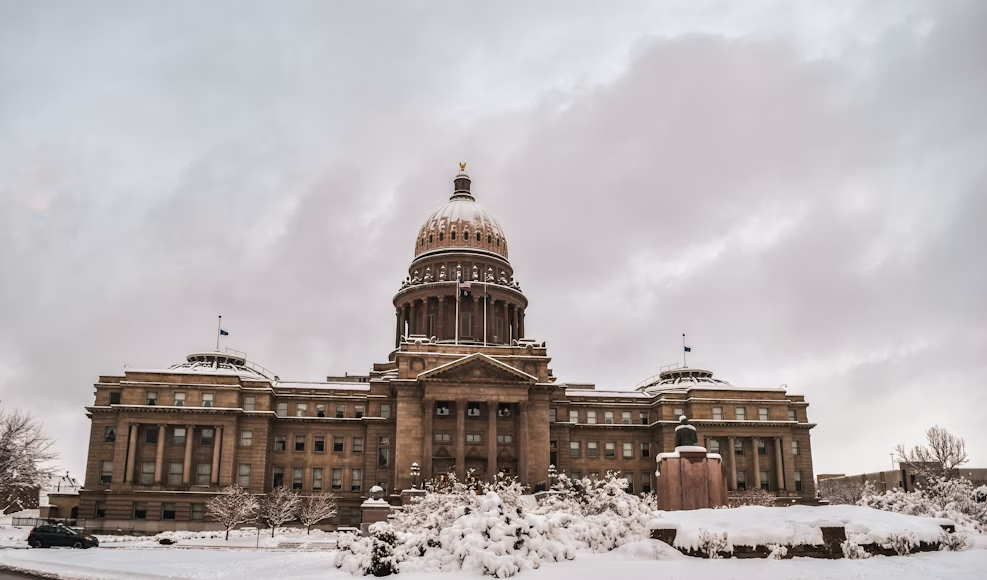
Predicting an Idaho winter is never simple, given the state’s diverse geography, ranging from high desert plains to rugged mountain peaks. However, meteorologists from the National Weather Service (NWS) and NOAA’s Climate Prediction Center often look to global climate patterns to gauge what lies ahead.
For the 2025 season, eyes are on the transition from El Niño to La Niña. Historically, La Niña winters in the Pacific Northwest and Northern Rockies, including much of Idaho, tend to be cooler and wetter than average. This shift often translates to increased precipitation. In the mountains, this means deep powder. In the valleys, it increases the likelihood of those coveted snow days, though temperatures often hover near freezing, making ice a significant variable.
Regional Breakdown: From Panhandle to Southern Plains
Idaho is massive, and weather impacts vary drastically depending on your latitude and elevation. Here is what different regions can generally expect:
- Northern Idaho (Coeur d’Alene, Sandpoint): This region often sees the most consistent winter impact. With La Niña conditions, the Panhandle is prone to heavy snowfall events, sometimes amplified by localized lake-effect snow.
- Central Idaho & the Rockies (Sun Valley, McCall): These high-elevation zones live for snow. Residents should prepare for significant accumulation. While schools here are well-equipped for winter, massive dumps of snow can still shut down highways and close districts due to safety concerns.
- Treasure Valley (Boise, Nampa, Caldwell): The most populous part of the state sits in a bowl that traps cold air (inversions). The Snow Day here often depends less on depth and more on timing and temperature. A mix of rain and snow that freezes overnight creates black ice, which is the primary cause of closures in this area.
- Eastern & Southern Idaho (Idaho Falls, Pocatello, Twin Falls): This high desert region battles wind as much as snow. Drifting snow can close roads even when no new flakes are falling. Bitter cold snaps, where wind chills drop to dangerous levels, are also a common reason for school delays or cancellations.
Regional Risk Assessment Table
| Region | Primary Winter Hazard | Impact on School Closures |
| Northern Idaho | Heavy Accumulation | High: Volume of snow often blocks rural bus routes. |
| Central Mountains | Extreme Snowfall / Avalanche Risk | Moderate: Infrastructure is built for snow, but highway closures stop buses. |
| Treasure Valley | Black Ice / Freezing Rain | High: High traffic volume + icy roads = gridlock and danger. |
| Eastern/Southern | Wind Chill / Drifting Snow | Moderate to High: Blowing snow reduces visibility to zero; cold temps risk student safety at bus stops. |
How Idaho Schools Make the Snow Day Call: It’s More Than Just Inches
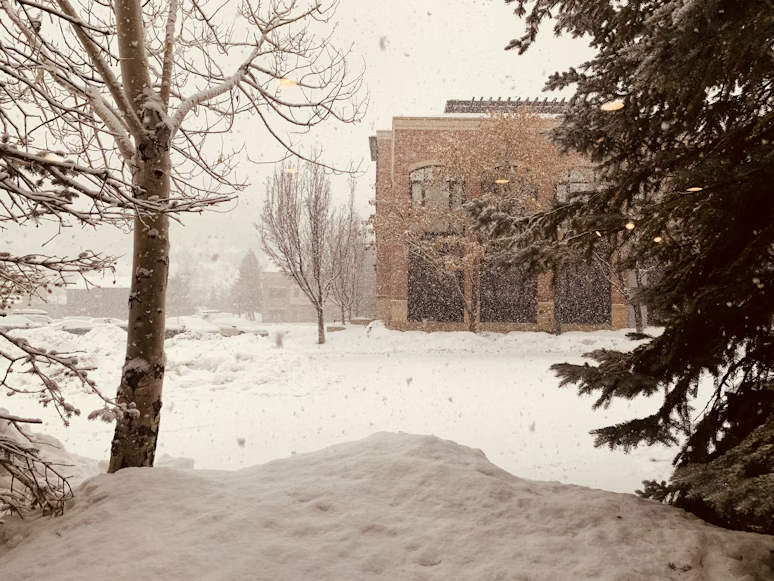
One of the biggest mysteries for parents is why school remains open when there are three inches of snow, but closes on a day with clear skies and icy roads. The decision process is rigorous, collaborative, and usually happens while most of the state is still asleep.
District superintendents typically begin their day as early as 3:30 or 4:00 AM. They don’t make decisions in isolation. Instead, they consult with a network of experts, including the Idaho Transportation Department (ITD) road crews, local law enforcement, and bus company supervisors.
Key Factors Beyond Snowfall
The volume of snow is rarely the only deciding factor. Superintendents weigh several critical variables:
- Temperature & Timing: Timing is everything. Two inches of snow falling at 4:00 PM is vastly different from two inches falling at 5:00 AM. If the storm hits right before the morning commute, plows may not have time to clear the main arterials. Furthermore, temperatures hovering around 32°F often create a “flash freeze” scenario, turning wet roads into skating rinks.
- Wind & Visibility: In open areas like the Camas Prairie or the Snake River Plain, wind is the enemy. Even if it hasn’t snowed in days, 30 mph winds can pick up existing snow and create “whiteout” conditions, making it impossible for bus drivers to see oncoming traffic or students at stops.
- Rural vs. Urban Considerations: Idaho districts are geographically large. A district like West Ada or Bonneville has to consider its most remote student. If rural bus routes on unmaintained county roads are impassable, the entire district often closes or delays to ensure equity and safety for all learners.
Staying Ahead of the Storm: Your Idaho Snow Day Toolkit
You don’t have to wait for the robocall to know what’s coming. By using the right resources, you can anticipate disruptions and plan your family’s schedule accordingly.
Official Sources for Reliable Information
Social media is full of rumors, but you need facts. Bookmark these sources:
- Idaho Department of Education: Many districts link their status directly to the state’s educational directory or use specific alert systems.
- National Weather Service (NWS): Follow the specific NWS office for your region (NWS Boise or NWS Pocatello) on social media. They provide hyper-local warnings that generic weather apps miss.
- Local News Outlets: Stations like KTVB, KBOI, and KIFI maintain running lists of school closures (often called the crawl) on their websites and morning broadcasts. These are verified directly with school officials.
Beyond Guesswork: How to Use a Snow Day Calculator or Predictor
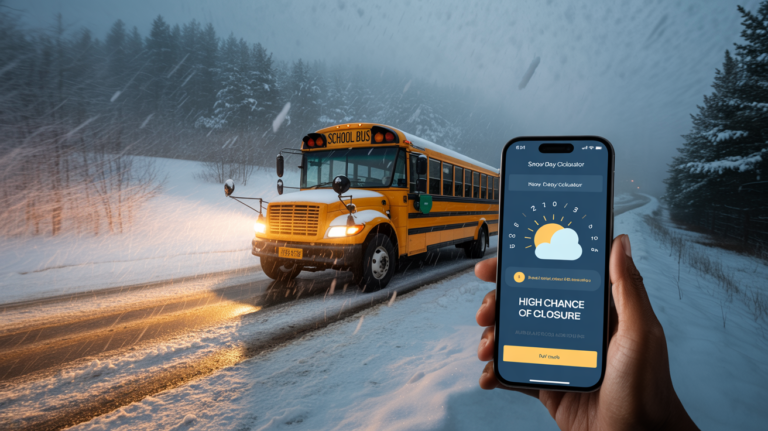
You may have seen Snow Day Calculators online. These tools can be fun, but it is vital to understand what goes into them. A reliable predictor utilizes algorithms that factor in real-time National Weather Service data for your ZIP code, historical closure patterns for your school district, and critical thresholds such as temperature, snowfall rate, and wind chill.
However, these are probability models, not guarantees. A calculator might say 90% chance of closure, but if the plow crews do an exceptional job overnight, school will be in session. Use these tools to gauge probability, but always confirm with official district alerts before turning off the alarm clock.
The Family Preparedness Checklist
If a Snow Day in Idaho keeps you home—or worse, if a storm knocks out power—preparedness is key.
For the Home:
- Power Outage Kit: Flashlights, fresh batteries, a portable phone charger, and a battery-powered radio.
- Warmth: Extra wool blankets and sleeping bags, especially if you rely on electric heat.
- Food: A three-day supply of non-perishable food and one gallon of water per person per day.
For the Car:
- Winter Survival Kit: Jumper cables, a small shovel, cat litter (for traction), a first-aid kit, and an ice scraper.
- Travel Essentials: Keep your gas tank at least half full to prevent fuel line freeze-up and ensure you can run the heater if stranded.
For the Kids:
- Snow Day Fun Kit: When the novelty of the snow wears off, have a boredom buster box ready with board games, craft supplies, and books. This helps manage expectations and keeps the day positive.
Safety First: Navigating an Idaho Snow Day
While snow days are often cause for celebration, they come with real risks. If you must travel, clear your entire vehicle of snow—including the roof—to prevent blinding drivers behind you. Slow down, increase your following distance, and remember that four-wheel drive helps you go, but it doesn’t help you stop on ice.
For children playing outside, keep an eye on the wind chill. Frostbite can occur in minutes on exposed skin when temperatures drop. Dress in layers, with a moisture-wicking base layer and a waterproof outer shell.
The Silver Lining: Why Snow Days Matter
Despite the logistical headaches, an Idaho snow day offers a rare pause. It is a moment where the community slows down. Neighbors help neighbors shovel driveways. Families trade rush-hour commutes for sledding at Camel’s Back Park or building snowmen in the front yard. Embracing this pause, rather than fighting it, is the best way to get through the long winter months.
Moving from Uncertainty to Readiness
A Snow Day in Idaho doesn’t have to be a source of stress. By understanding the forecast, knowing how your district makes safety decisions, and keeping your home and vehicle prepared, you can navigate winter 2025 with confidence. When the flakes start flying, you won’t be scrambling—you’ll be ready to pour the hot cocoa.
Frequently Asked Questions
How does a Snow Day Calculator work?
A reliable predictor utilizes algorithms that factor in real-time National Weather Service data for your ZIP code, historical closure patterns for your school district, and critical thresholds such as temperature, snowfall rate, and wind chill. Remember, it’s a forecasting tool; always confirm with official district alerts.
Do Idaho schools use ‘virtual learning days’ instead of snow days?
This varies by district. Since 2020, many Idaho districts have adopted “emergency closure” policies that allow for remote learning days to avoid extending the school year into summer. However, many superintendents still prefer traditional snow days to allow students a mental break, especially if power outages are widespread. Check your specific district’s handbook for their current policy.
What should I do if my child’s school is open, but I feel the roads are unsafe?
Ultimately, the safety of your child is your decision. If your specific neighborhood streets are impassable or you do not feel safe driving, most districts will excuse an absence due to weather conditions. Contact your school’s attendance office directly.
How can I report unsafe road conditions to ITD?
The Idaho Transportation Department relies on the “Idaho 511” system. You can view road conditions, cameras, and incident reports on the 511 website or app. While you cannot “dispatch” a plow yourself, reporting severe hazards through local non-emergency dispatch numbers can help authorities prioritize dangerous spots.