
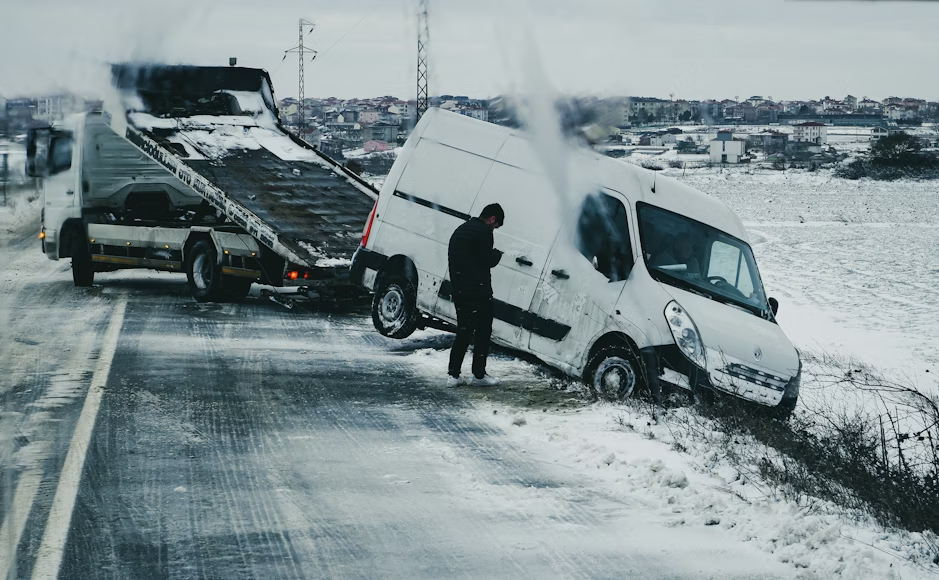
How Much Snow Is Dangerous for Travel? A Guide for Safe Winter Driving
You’re watching the forecast, coffee in hand, wondering if your 20-mile commute is actually possible. The app says 3 inches are predicted by 8 AM. Is it safe? Or are you about to white-knuckle your way into a ditch?
The answer isn’t just a number. How much snow is dangerous for travel? is a question that depends on snow type, road conditions, your vehicle, and frankly, your own judgment.
As a winter driving instructor who has spent years navigating mountain passes and whiteouts, I have seen confident drivers get stuck in 2 inches of slush, and cautious drivers navigate 6 inches of powder safely. The difference usually comes down to preparation and understanding the limits of physics.
In this guide, we’ll move beyond simple inch counts and give you a practical framework, including the Rule of 3 & 6, to help you make the smartest, safest call.
The Critical Variables – It’s Never Just About Inches
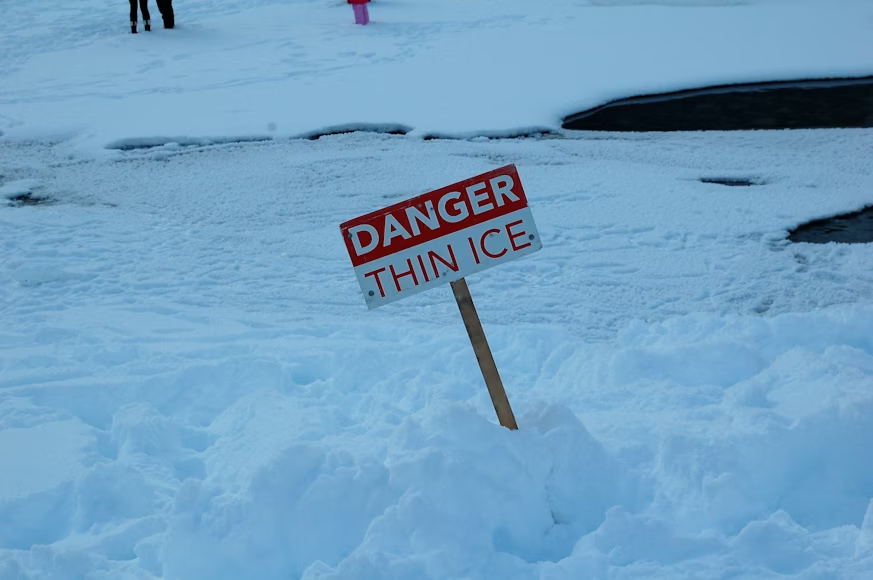
Before we talk about specific depths, we need to address the variables that change the game. Two inches of snow at 30°F is a completely different beast than two inches at 10°F. Here are the four factors that actually determine danger.
1. Snow Type & Temperature
Not all snow is created equal. The temperature dictates the texture and, consequently, the traction.
- Light, Fluffy Powder (Below 20°F): This type of snow is less slippery initially because it lacks moisture. However, the danger here is visibility and drifting. The main challenge becomes: how deep of snow can you drive in before your car high-centers (gets stuck on its belly)?
- Wet, Heavy Snow (Around 32°F): This is heart attack snow. It’s extremely slick, packs into ice instantly under tires, and creates a slushy mess that pulls your car around. It strains your wipers and clogs your wheel wells. This is a nightmare at almost any depth.
- Slush & Ice Pellets: This is arguably the most dangerous condition. Is snow dangerous to drive on? Yes, but it’s often the invisible layer of ice underneath the slush that causes the wrecks. When temperatures hover around freezing, melted snow refreezes into black ice, turning roads into skating rinks.
2. Road Treatment & Traffic
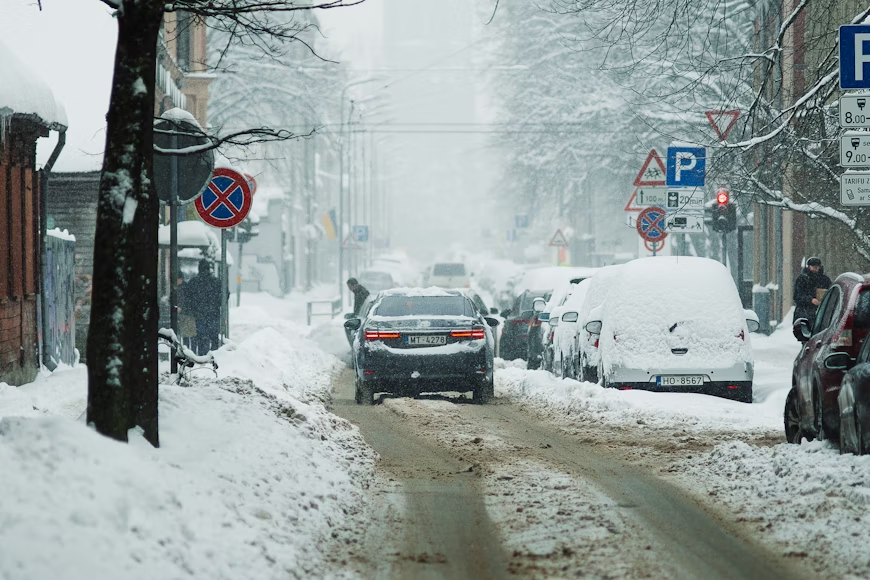
Are you driving on a major interstate or a rural backroad? Interstates are pre-treated with brine and salt, melting the first inch or two on contact. Traffic also helps melt snow (though it packs it down into ice if it’s cold enough). A rural road with 3 inches of snow is vastly different from a highway with the same amount.
3. Your Vehicle & Tires (The #1 Factor)
This is where most drivers overestimate their ability. If you are running All-Season tires, you need to stay home sooner than someone with dedicated Winter Tires.
- All-Season Tires: These start to lose significant grip below 45°F. In snow, they act like hard plastic pucks.
- AWD/4WD: All-Wheel Drive helps you go, but it does absolutely nothing to help you stop or turn.
- Winter Tires: These are formulated with softer rubber compounds that stay flexible in the cold and have sipes (tiny slits) that bite into ice.
4. Driver Experience & Urgency
Panic is a hazard. If you are white-knuckling the steering wheel, your muscles are tense, and your reactions will be jerky—the exact opposite of what winter driving requires. Urgency is also a killer. If you are rushing to a meeting, you are more likely to drive too fast for conditions.
The Safety Thresholds – A Practical Guide by Inch
Now, let’s look at the specific depths. Remember, these are guidelines. Always err on the side of caution.
1-2 Inches: The Deceptive Zone
Is it safe to drive in 2 inches of snow?
For many, this sounds insignificant. But this is the Deceptive Zone. This is where black ice forms first. The roads might just look wet or slushy, but that sheen often hides a layer of ice.
Is 2 inches of snow enough to cancel school?
Often, yes. School districts cancel not just because of the depth, but because buses struggle on untreated side roads and hills, and the risk of ice is high during early morning hours.
The Verdict: If it’s the first snow of the year or temps are near freezing, treat this as high-risk. Double your following distance.
3-4 Inches: The Decision Point
Is 3 inches of snow a lot to drive in?
This is the tipping point where travel disruption begins in earnest. At 3 inches, lane markers vanish. You are now relying on muscle memory and the tracks of the car in front of you.
What does 3 inches of snow look like?
Picture snow coming up to the bottom of your car door or covering the rubber of your tire up to the rim. It’s enough to start challenging the ground clearance of smaller sedans.
The Rule of 3 & 6:
Here is a simple rule to remember:
- At 3 Inches: If you have winter tires and experience, this is often manageable with extreme caution. For all-season tires, this should be your upper limit.
- At 4+ Inches: Even with good tires, you need a compelling reason to go out. The risk of sliding into an intersection or getting stuck on an incline skyrockets.
Many drivers on forums discussing driving in 4 inches of snow note that this is where traction control lights start flashing constantly, and braking distances triple.
6+ Inches: The No-Go Zone for Most
Is it safe to drive in 6 inches of snow?
For the vast majority of passenger vehicles, no. Six inches is enough to reach the undercarriage of a standard sedan (Honda Civic, Toyota Camry).
How deep of snow can you drive in?
Once the snow hits your undercarriage, it lifts the weight of the car off the tires. You lose traction, and you are effectively high-centered. You are now a sled.
The Verdict: Only essential workers with specialized vehicles (high-clearance 4x4s with aggressive snow tires) should attempt this. For everyone else, 6 inches is a ‘stay home’ order from nature. Emergency services will be delayed, so if you wreck, you could be waiting hours for help.
The Safe Travel Decision Framework

Still unsure? Use this checklist before you grab your keys.
The 5 Pre-Drive Checks
- Weather App Deep Dive: Don’t just look at the total accumulation. Look at the hourly breakdown. Is freezing rain mixed in? Is the temperature dropping rapidly?
- Road Cam Check: Most state DOT websites have live traffic cameras. Look at the actual road surface. Is it black (wet/treated) or white (covered)?
- Tire Tread Check: Do the “Penny Test.” If you can see all of Lincoln’s head, your tires are bald and dangerous.
- Emergency Kit Verification: Do you have a blanket, shovel, flashlight, and cat litter/sand? If you get stuck, these are your lifelines.
- Self-Assessment: Are you tired? Stressed? If you aren’t at 100%, stay home.
Should You Go?
- Is travel essential? (Medical emergency vs. I want tacos) -> If No, Stay Home.
- Is snow depth > 6 inches? -> If Yes, Stay Home.
- Do you have winter tires? -> If No, reduce your depth threshold by half.
- Is ice/freezing rain predicted? -> If Yes, Stay Home regardless of snow depth.
If You Must Drive – Non-Negotiable Techniques
If you’ve gone through the framework and decided you must drive, simple slow-down advice isn’t enough. You need specific techniques.
- Threshold Braking: If you don’t have ABS, or even if you do, slamming on the brakes is bad. Apply steady, firm pressure. If you feel the pedal pulse (ABS working), keep your foot buried. Do not pump the brakes if you have ABS.
- Steer Into the Skid: If your back end slides right, turn your wheel right. Why? You want your front wheels to point down the road, not at the ditch. It aligns the car’s momentum with its direction.
- 3x Following Distance: It takes 4-10 times longer to stop on snow and ice. The standard “3-second rule” should be revised to the “10-second rule.”
What to Do If You Get Stuck
- Clear the Tailpipe: Before doing anything else, clear the snow around your exhaust pipe. If it’s blocked, carbon monoxide can build up in the cabin and kill you.
- Turn Off Traction Control: Sometimes, you need the wheels to spin to dig down to pavement or rock.
- The Floor Mat Trick: Take your floor mats out and wedge them under your drive wheels (front wheels for FWD, rear for RWD). The rubber backing can give you just enough grip to pop out.
Empowerment Through Knowledge
Deciding how much snow is dangerous for travel is a personal calculation, but it shouldn’t be a guess. You now have the framework the pros use: assess the snow type, check your tires, and respect the Rule of 3 & 6.
When in doubt, the safest answer is always to delay your trip. No meeting, errand, or social gathering is worth the risk of a serious accident. Stay warm, stay safe, and respect the conditions.
FAQs
Is it safe to drive in 2 inches of snow with all-wheel drive?
AWD helps you get moving, but it doesn’t help you stop or steer. On 2 inches of slick snow, your braking distance can be 4-5 times longer than on dry pavement. Overconfidence with AWD is a leading cause of winter accidents because drivers get up to speed easily but can’t stop when they hit a patch of ice.
How deep of snow can a Subaru Forester (or other popular AWD SUV) drive in?
With proper winter tires, a typical AWD SUV like a Forester (which has about 8.7 inches of ground clearance) can handle 6-8 inches of unplowed powder. However, in heavy, wet snow, that limit drops significantly to 4-5 inches due to the weight of the snow and traction loss. Always know your vehicle’s ground clearance; once you exceed it, you risk high-centering.
I see trucks driving fast in the snow. Should I keep up?
Absolutely not. Truck drivers often have more weight on their tires and possibly more aggressive tread, giving them a slight advantage. However, they also take much longer to stop. Drive for your vehicle’s capabilities and your comfort level. If they want to pass, let them.