Winter Storm Warning in Washington: Latest Updates, Snow Forecast & What to Expect
A Winter Storm Warning in Washington is an urgent alert for hazardous snow, ice, and life-threatening travel conditions. Whether you’re in Seattle facing a rare lowland snow event or in Spokane bracing for another major storm, understanding this warning is critical for your safety.
Washington’s diverse topography—from the coastal lowlands to the Cascade peaks and the eastern plains—means that a winter storm warning can manifest differently depending on your location. For some, it means a potentially paralyzing dusting on steep city hills; for others, it signals feet of accumulation and dangerous wind chills. This guide breaks down the current warnings, forecasts, and crucial preparation steps to keep you safe during the upcoming weather event.
Breaking Now: Is There a Winter Storm Warning in Washington Today?
Editor’s Note: Weather conditions change rapidly. Always cross-reference with the National Weather Service (NWS) for real-time alerts.
Current Status [Template for Live Updates]:
As of today, the National Weather Service (NWS) in Seattle and Spokane is monitoring active systems across the region. When a Winter Storm Warning is issued, it generally indicates that significant snow, sleet, or ice is imminent or occurring.
- Active Warnings: Check the NWS Seattle or NWS Spokane official feeds for the specific warning polygon.
- Affected Areas: Warnings typically cover broad zones, such as the Puget Sound Lowlands (Seattle, Tacoma, Olympia), the Cascade Mountains, or the Inland Empire.
- Primary Risks: Heavy snow accumulation, reduced visibility, and slick roadways are the primary concerns during these windows.
If a warning is active, travel is strongly discouraged unless necessary. Conditions can deteriorate within minutes, turning a standard commute into a dangerous situation.
Washington Snow Forecast: Timing, Accumulation & Impact Zones
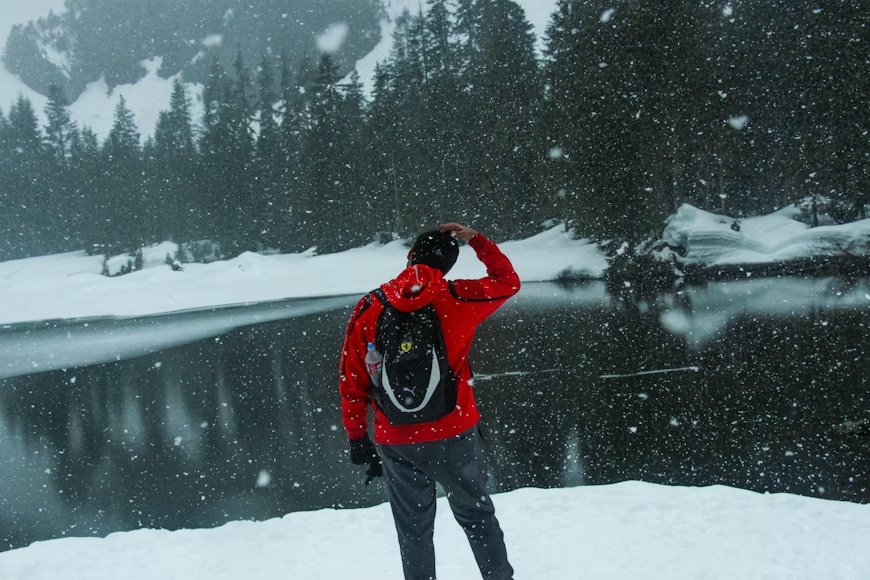
Forecasting snow in Washington is notoriously complex due to the convergence of Pacific moisture and cold continental air. Current models, including the GFS and ECMWF, suggest varied impacts across the state.
Here is the projected breakdown by region:
| Region | Cities/Areas | Expected Snow | Peak Timing | Primary Risks |
| Puget Sound Lowlands | Seattle, Tacoma, Olympia | 2-6″ | Late Afternoon-Evening | Icy roads, bridge freeze, steep hill hazards |
| Western WA Foothills | Kitsap, Everett, Bellingham | 4-8″ | Overnight | Power outages due to heavy wet snow, tree damage |
| Eastern Washington | Spokane, Tri-Cities, Yakima | 6-12″+ | Morning through Night | Blowing snow, low visibility, drifting |
| Mountain Passes | Snoqualmie, Stevens, White Pass | 12-24″ | Continuous | Whiteout conditions, traction tire requirements, and pass closures |
Seattle Area Forecast: How Disruptive Will This Storm Be?
The unique geography of the Puget Sound region creates specific challenges during winter storms. While the total accumulation might seem low compared to the mountains, the impact on local infrastructure is often severe. The convergence zone often sets up between Seattle and Everett, leading to localized heavy bands of snow.
The Seattle Department of Transportation (SDOT) typically pre-treats major arterials and bridges like the SR 520 bridge and the West Seattle Bridge. However, residential streets and steep grades—specifically in neighborhoods like Queen Anne, Magnolia, and Capitol Hill—remain high-risk zones. Vehicles without proper traction tires or AWD often struggle, leading to gridlock. Public transit users should expect delays and reroutes to snow routes if accumulation exceeds a few inches.
Eastern Washington & Spokane: Bracing for Heavy Accumulation
Eastern Washington faces a different beast entirely. Residents in Spokane and the Palouse are accustomed to winter weather, but significant storms can still overwhelm resources.
While Spokane County road crews are highly experienced and equipped for snow removal, the forecasted heavy accumulation from this system will likely cause significant delays on I-90. Residential street plowing often lags behind arterials, meaning neighborhood travel could be difficult for 24 to 48 hours. The combination of falling snow and wind can also create drifting, particularly on open highways like US-195 and US-395, severely reducing visibility.
Winter Storm Warning vs. Blizzard Warning: Washington’s Key Differences
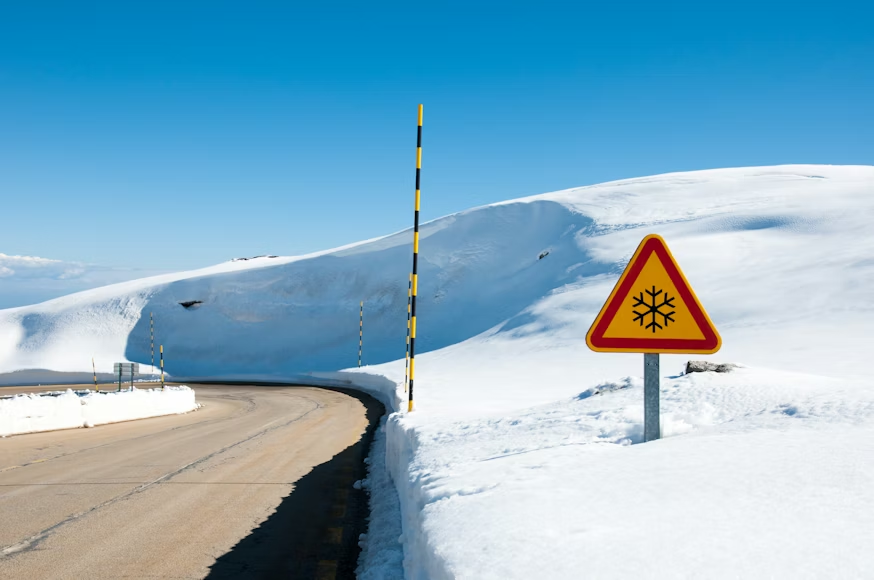
It is vital to distinguish between the different alert levels to understand the severity of the threat.
| Alert Type | Definition | Primary Threat |
| Winter Storm Warning | Heavy snow, sleet, or ice is expected. (e.g., 6+ inches in 12 hours). | rapid accumulation, heavy weight on trees/power lines, slippery roads. |
| Blizzard Warning | Sustained winds or gusts >35 mph AND visibility <1/4 mile for 3+ hours. | Whiteouts, life-threatening wind chill, severe drifting snow. |
Blizzard warnings are less common in the lowlands but can occur in the Moses Lake basin, the Waterville Plateau, or through the mountain passes. If you are under a Blizzard Warning, do not travel. Disorientation can happen quickly if you become stranded.
Travel, Power & Safety: Your Hour-by-Hour Risk Guide
Staying safe means staying ahead of the storm. Follow this phased approach to manage the risks associated with the warning.
Now (Before Snow Begins)
- Check your kit: Ensure your home emergency kit is stocked. Verify flashlights have fresh batteries and charge all essential devices.
- Clear the area: Move vehicles off the street if possible to aid snowplows.
- Protect infrastructure: Wrap outdoor faucets and ensure your heating system is functioning.
During (Worst Conditions)
- Avoid travel: Stay off the roads. If you absolutely must drive, check WSDOT for pass reports. Remember that I-90 over Snoqualmie Pass is the priority for plowing; secondary highways like SR 20 or SR 410 often see closures.
- Monitor heat: If you lose power, keep doors closed to retain heat. Do not use outdoor heating devices (grills, camp stoves) indoors due to carbon monoxide risks.
Power Outage Risk
Western Washington is particularly susceptible to power outages during these events. The snow here is often concrete snow, wet and heavy, which clings to evergreen trees, causing limbs to snap onto power lines.
- Have a backup heat source ready, such as a wood stove or a generator (operated safely outdoors).
- Know how to report an outage to your provider, whether it is Puget Sound Energy, Seattle City Light, or Avista.
Will Schools Close? The Washington Snow Day Forecast
For parents and students, the snow day prediction is the most pressing question. In Western Washington, school districts tend to be conservative regarding closures.
Districts like Seattle Public Schools and Bellevue School District typically make closure or delay decisions by 5:30 AM. These decisions rely heavily on road condition reports from SDOT and the ability of Metro buses to navigate snow routes. Because of the hilly terrain, even 2-3 inches of slushy lowland snow can trigger widespread closures or a shift to remote learning.
In Eastern Washington, where snow is more common, the threshold for closure is higher. However, extreme cold or unplowed rural bus routes will still force delays or cancellations.
How to Prepare: The Washington Winter Storm Checklist
Preparation goes beyond buying milk and bread. Here is a specific checklist for Washington residents.
- For Your Home: Insulate pipes, especially those in unheated crawl spaces, a common feature in Pacific Northwest architecture. A frozen pipe can burst, causing massive damage. Ensure you have a battery-powered NOAA weather radio to receive alerts if cell towers go down.
- For Your Car: Washington State Law (RCW 46.61.445) allows the WSDOT to require traction tires or chains on mountain passes. You must carry chains in your vehicle when crossing passes in winter, even if you have 4WD/AWD. Keep a dedicated car kit with a shovel, sand/kitty litter for traction, and blankets.
- Supplies: Maintain a 72-hour supply of non-perishable food and water. Don’t forget medications and hand-warmers.
How to Get Accurate Winter Storm Alerts in Washington
Misinformation spreads quickly during weather events. Avoid relying on unverified social media rumors. Stick to these official, authoritative sources:
- National Weather Service (NWS): Follow NWS Seattle or NWS Spokane on Twitter/X or their official websites for the raw data and warning polygons.
- WSDOT: The WSDOT app and website provide access to hundreds of live traffic cameras and real-time pass conditions.
- Local Emergency Management: Sign up for alerts from King County, Pierce County, or Spokane County emergency management systems. Many counties use CodeRED or AlertSense to push text notifications.
Stay Safe, Stay Informed
Winter storms in Washington can be beautiful, but they demand respect. By monitoring the latest Winter Storm Warning updates, understanding the difference between forecasts in the lowlands versus the mountains, and preparing your home and vehicle, you can weather the storm safely.
Bookmark this page for future storms, and explore our Washington Weather Center for year-round forecasts and preparedness guides.
Frequently Asked Questions (FAQs)
How much snow will Seattle-Tacoma International Airport get? Will my flight be canceled?
Snowfall at SEA is typically lighter than in the surrounding foothills or higher elevations. However, the airport operations can slow significantly due to the need for de-icing planes and clearing runways. Delays are common, and cancellations occur if the snow rate exceeds the airport’s removal capacity. Always check directly with your airline before heading to the airport.
Where can I see a winter storm warning map for Washington?
The most authoritative map is available on the National Weather Service website. While news outlets provide graphics, the NWS offers the official, polygon-based warning area map that defines exactly which zones are under alert.
What’s the difference between a Winter Storm Watch and a Warning?
Think of it regarding timing and certainty. A Winter Storm Watch is issued 24-48 hours in advance and means there is a potential for severe conditions. A Winter Storm Warning is issued 12-24 hours ahead (or sooner) and means severe conditions are imminent or already occurring. When a warning is issued, you should take immediate action to secure your safety.